Episode notes
The European Commission's KIDS Act proposal would change how chatbots interact with minors, alongside new social-media age limits. Checking a birthday would not finish the safety work. Also: newly unsealed Microsoft and OpenAI documents raise questions about funding original reporting; Flock's live-camera demonstrations reveal the gap between warnings and blocks; CrowdSec discovers a May code leak months later; and a smaller Bonsai model offers local AI with performance tradeoffs to test.
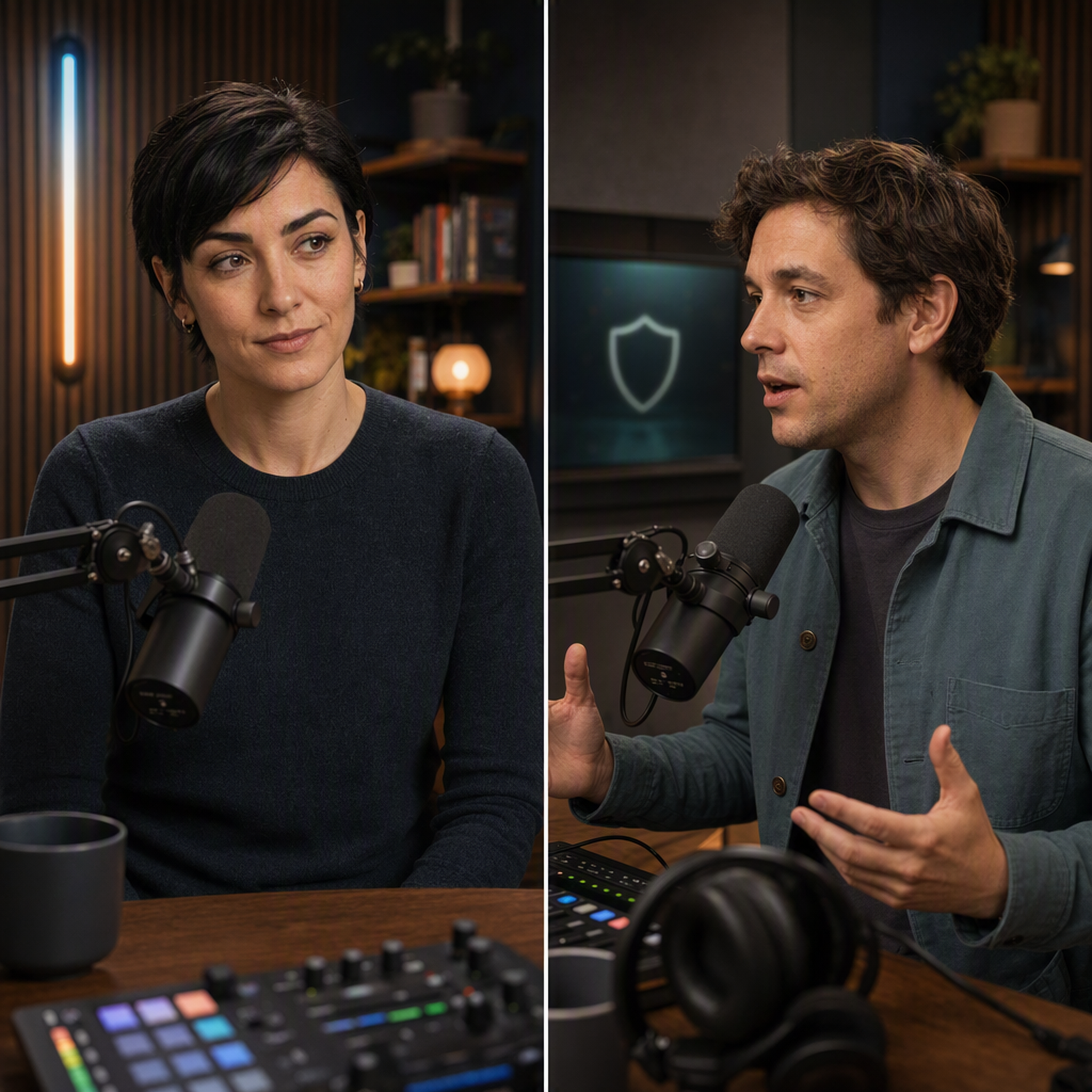
Hosts: Alex & Jordan
Show: Chief Skeptic Officer — The side of tech news nobody talks about.
Drop: Daily at 7:00 A.M. America/New_York
Episode date: 2026-09-18
In this episode
EU child-safety proposal — The September 17 proposal includes social-account age tiers, privacy-preserving age checks and safer designs. Article 14 addresses chatbot behavior likely to create emotional dependency in minors and defaults use of information from earlier interactions off, with safety and settings exceptions. This is proposed legislation, not enacted law. The audit asks how difficult product-design obligations will be enforced alongside easier age checks.
AI and the news supply — A September 17 publisher filing quotes internal Microsoft and OpenAI warnings about AI answers replacing visits to news sites. The filing is a litigant's presentation, not a liability ruling. Microsoft defends transformative fair use. Its quoted Copilot-versus-Bing click-through comparison does not measure every publisher's entire audience. The enduring question is who funds new reporting.
Flock's demonstration cameras — 404 Media reports demo accounts searched live camera networks. Published logs distinguish allowed, warned and blocked queries; they do not establish what every query found. Flock says tests demonstrated safeguards and that its demo environment is now isolated from real-camera sharing. Organizational permission and a warning before a sensitive search leave separate questions about residents' consent and meaningful protection.
CrowdSec's delayed discovery — CrowdSec confirmed on September 17 that code was copied in May, after notification on September 16. Roughly 300 repositories included more than 130 already-public projects. The company says no customer data was exposed and suspects a compromised development dependency exposed an access key. The suspected route and customer-data boundary are attributed company assessments. The four-month discovery gap deserves an explanation separate from the code's commercial value.
Bonsai runs smaller — PrismML released Ternary Bonsai 2 27B with roughly 5.9GB of weights and an Apache 2.0 license. It reports 98.2% of the full-precision model's aggregate benchmark performance. That is neither a universal accuracy percentage nor the total memory needed at runtime. A downloadable local model lets developers test the tradeoff on their own work.
Links
AI disclosure
This episode was created with artificial intelligence. Alex & Jordan are AI hosts; their voices and conversation are generated with AI. Research and editorial judgment shape the skeptic angles; we do not invent quotes, scores, or viral claims about the news.
Transcript
Alex and Jordan, turn by turn. Tap a line to jump in the player.
0:00
Alex
The European Commission proposes new age limits and child-safety rules for social media and chatbots.
0:07
Jordan
A newly unsealed court filing quotes Microsoft and OpenAI staff warning that AI could replace visits to news sites.
0:15
Alex
Public records show Flock used real camera networks for demonstrations under a made-up police department name.
0:23
Jordan
Security company CrowdSec confirms a source-code leak from May that it learned about this week.
0:29
Alex
PrismML releases a smaller AI model designed to run locally, with its weights fitting into about six gigabytes.
0:37
Jordan
That's the board. Stay for the audit. We open those up. Today's Chief Skeptic Officer.
0:53
Jordan
What if there was an AI that researched the tech news, checked the sources, and asked what the tech news is not telling you?
1:01
Alex
That's us. I'm Alex.
1:03
Jordan
And I'm Jordan.
1:05
Alex
You're listening to Chief Skeptic Officer. The side of tech news nobody talks about.
1:11
Jordan
Every day at seven A.M. New York time. Wherever you get your podcasts.
1:16
Alex
The European Commission published its KIDS Act proposal yesterday. It would restrict children's social-media accounts and require safer designs across social platforms, games and chatbots. It still needs to become law.
1:30
Jordan
So a parent hears that and thinks, another age check. Another thing to approve on a phone.
1:37
Alex
That's part of it. Under thirteen, no social account. At thirteen and fourteen, guardian approval and limits. Independent access starts at fifteen. There are separate exceptions for young children watching specially designed video services through a guardian's account.
1:52
Jordan
Already more complicated than a ban. But the age check is where I get uneasy. How much personal information does a child have to hand over?
2:01
Alex
The proposal requires checks that protect privacy. An approved age-checking service could give the platform a yes-or-no age confirmation, without handing over the whole identity document. Whether that works reliably in practice is a question for implementation.
2:17
Jordan
Right, so the platform gets your passp- no, just the confirmation. That isn't what I expected.
2:24
Alex
And I'm on Article fourteen now. This is the part about AI companions and conversational chatbots. It would require avoiding designs that simulate relationships likely to create emotional dependency in minors.
2:40
Jordan
That's a demand to change the conversation itself.
2:45
Alex
Yes. And by default, information from a child's previous interactions should not carry into later ones. There are exceptions for safety and settings.
2:56
Jordan
Oh. That changes how I read this. Remembering everything about you is one of the things these products sell as care. The proposal is questioning that feature.
3:07
Alex
It also calls for safety testing before release. Checking a birthday would not finish the job.
3:13
Jordan
But how do you test whether a helpful chat is becoming a relationship somebody can't leave? You can measure how long they stay. You can't just turn that number around and call it well-being.
3:27
Alex
You'd need evidence about the behavior and its effects. The text creates an obligation; it doesn't hand us a finished test.
3:35
Jordan
And if enforcement concentrates on the easy number, the birthday, companies could spend more effort checking the child than changing the product.
3:43
Alex
That's what to watch as this gets negotiated. Does the product become safer after the child gets through the door?
3:51
Jordan
News publishers suing OpenAI and Microsoft have filed newly public arguments with internal company documents. Those documents include warnings that AI answers could replace the visits that help fund news reporting.
4:05
Alex
I'm reading the filing alongside Microsoft's response. The company defends its products as fair use, meaning a lawful use of copyrighted material without permission. And it says an individual employee's comments don't represent its legal position.
4:19
Jordan
Which matters. An angry email inside a company isn't a judge's decision.
4:25
Alex
Agreed. This is the publishers presenting their strongest evidence. No new ruling says they've won.
4:32
Alex
But one quoted Microsoft document describes an end product threatening the economic foundations of its own suppliers. It calls that a doom loop.
4:42
Jordan
The supplier here is the person doing the original reporting. Going to court, interviewing someone, finding a document.
4:49
Alex
Exactly. The answer can get cheaper for the reader while the reporting gets harder to pay for.
4:55
Jordan
Yet readers do want answers. Sending someone through five pages of ads to learn one fact isn't a wonderful service either.
5:04
Alex
No, and publishers don't earn immunity from competition. I'm concerned about the next piece of information. An AI answer can draw on existing reporting, through training or search. Who funds tomorrow's?
5:16
Jordan
They were warned. How much does that settle?
5:19
Alex
It matters, but the filing still has to establish the harm it claims. Microsoft disputes the legal conclusions. Knowing about a risk doesn't establish every claimed outcome.
5:31
Jordan
Fair. The numbers need that care too.
5:34
Alex
Yes. The filing says people were much less likely to click through to some publishers from Copilot's AI answers than from traditional Bing search. That is a comparison between those services. It is not a claim that every newspaper lost that share of its entire audience.
5:50
Jordan
The Microsoft document even has a cartoon with content creators holding up the tech industry. Somebody inside was thinking about dependence.
5:58
Alex
And some publishers have deals that pay for use of their content. So the question is how widely the money reaches, and whether it supports producing information people still need.
6:09
Jordan
I want the quick answer. I also want there to be someone left who can check it.
6:14
Alex
Then a useful answer service needs a durable relationship with the people finding things out. The lawsuit will test legal obligations. The business problem keeps going either way.
6:26
Jordan
Flock sells camera systems that police can search using ordinary descriptions of cars or people. Now, records reported by 404 Media show its own demo accounts searched real camera networks in places including Dunwoody, Georgia, and Bryan, Texas.
6:41
Alex
One account was called Flock City P.D. It wasn't an actual police department. Flock says that was the name of a demonstration and testing organization.
6:50
Jordan
Real residents appearing in a sales demonstration. Did they get asked?
6:55
Alex
The company says its partners gave permission for testing. That is permission from an organization. It doesn't answer how individual residents feel about being included.
7:05
Jordan
I'm looking at the published search log. There are separate results here: allow, warn and block.
7:12
Alex
Those are decisions about whether to let a search proceed. The table doesn't prove what every search actually found.
7:19
Jordan
A search for a person with a Star of David was blocked. A vehicle search for Star of David got a warning. Same religious symbol, different treatment.
7:28
Alex
And searches such as a large group with signs were allowed. Flock says sensitive examples were used to demonstrate its safeguards, including what officers shouldn't search for.
7:38
Jordan
Then why demonstrate that on people going about their day? A test can have a legitimate purpose and still use the wrong material.
7:46
Alex
Here's Flock's own explanation. Some searches involving protected religion, speech or protest produce a warning and go to a superior for review if the user proceeds. That's a different promise from refusing the search.
8:00
Jordan
So when they say the guardrails worked, they might mean the warning appeared.
8:06
Alex
Yes. For that category, warning and later review can be the intended behavior. We should judge the actual rule they're choosing.
8:15
Jordan
Then saying it worked doesn't settle whether the rule protects people. That's the part I'd want the city to answer.
8:23
Alex
And there's an update we need to keep. Flock told 404 Media its demo system is now separated from those live networks. It says that account no longer searches real cameras, and agencies can't form sharing relationships with it.
8:37
Jordan
Good. That addresses the live-demo access. It doesn't make a warning the same as a block in the systems police use.
8:45
Alex
Or make organizational permission the same as consent from everyone recorded.
8:51
Jordan
Before a city calls this protection, it should say which searches are impossible, which just get a popup, and who actually checks what happened afterward.
9:02
Alex
CrowdSec makes security software. Yesterday it confirmed that someone copied source code from its GitHub repositories back in May. The company says it was informed on September sixteenth.
9:13
Jordan
Four months later. What was taken? The code that customers run?
9:17
Alex
About three hundred repositories, meaning collections of code. More than a hundred and thirty were already public. The private ones included code for its online control panel and automated cloud operations.
9:30
Jordan
That's an important split. Copying a public project isn't a secret-data breach.
9:36
Alex
Right. And CrowdSec says no customer data was exposed. That is its assessment of this leak.
9:43
Jordan
That's their account so far. We don't have an independent audit establishing every boundary.
9:50
Alex
This is its public project. Open code is part of the business. CrowdSec argues that the value comes largely from its network and data, and that much of the leaked code has changed.
10:01
Jordan
Which could be true. A competitor getting old code doesn't automatically get your customers.
10:08
Alex
I'm less interested in whether a competitor got a bargain. I'm interested in how an access key could let someone read private projects without the company learning about it for months.
10:19
Jordan
Do we know how someone got that key?
10:22
Alex
Not conclusively. CrowdSec suspects an earlier attack on a software component called TanStack. It thinks malicious code in that component exposed a key used by its automated development systems. That is the company's working explanation.
10:37
Jordan
A piece of software used while building the software. And the key gives it access to other things.
10:44
Alex
Yes. The question is how much access that key had, and what evidence would reveal it being used unexpectedly.
10:52
Jordan
Their product page promises protection against targeted attacks. People will read this and think, if the security company can get hit, why bother?
11:00
Alex
Because protection still reduces risk. The uncomfortable part is that a company can be good at detecting one kind of attack and miss a different route into its own systems.
11:12
Jordan
So what would reassure you now?
11:15
Alex
First, keep the claim precise. A source-code leak doesn't establish that customers were hacked.
11:22
Jordan
But don't let reassurance about the code's commercial value replace an explanation of that delay.
11:29
Alex
Customers deserve both: a careful account of what was exposed, and evidence that the same access would be caught sooner now.
11:38
Jordan
One practical release before we go. PrismML has released Bonsai Two, a compressed version of a larger model in the Qwen family. The model's weights, the stored numbers it uses, take about five point nine gigabytes.
11:52
Alex
That's over nine times smaller than its full-precision version, according to PrismML. It can make use on your own computer more practical. The weights aren't the whole memory bill, though. Running a long conversation takes extra space, and you need compatible software.
12:06
Jordan
The company reports ninety-eight point two percent of the original's average score across tests of skills such as coding and reasoning. That does not mean it answers ninety-eight percent of questions correctly.
12:20
Alex
Or that every task loses the same amount of quality. The useful fact is that the weights are available under a license allowing reuse and modification, including commercially, so developers can test the tradeoff.
12:33
Jordan
Less dependence on a hosted AI service. You can actually download this one.
12:39
Alex
Then test it on the work you care about. A good average is an invitation to test, not a reason to skip it.
12:46
Alex
That's our audit for today. Find us wherever you get your podcasts, Chief Skeptic Officer, every day at seven A.M. New York time.
12:53
Jordan
Tell us what you're skeptical about. Drop it in the comments, the angle you can't stop chewing on.
13:00
Alex
Stay curious. Stay skeptical.
13:03
Jordan
Doubt both.